
The Buddha
“And so, where better to begin than with a man who went looking for peace and found it sitting quietly under a tree?”
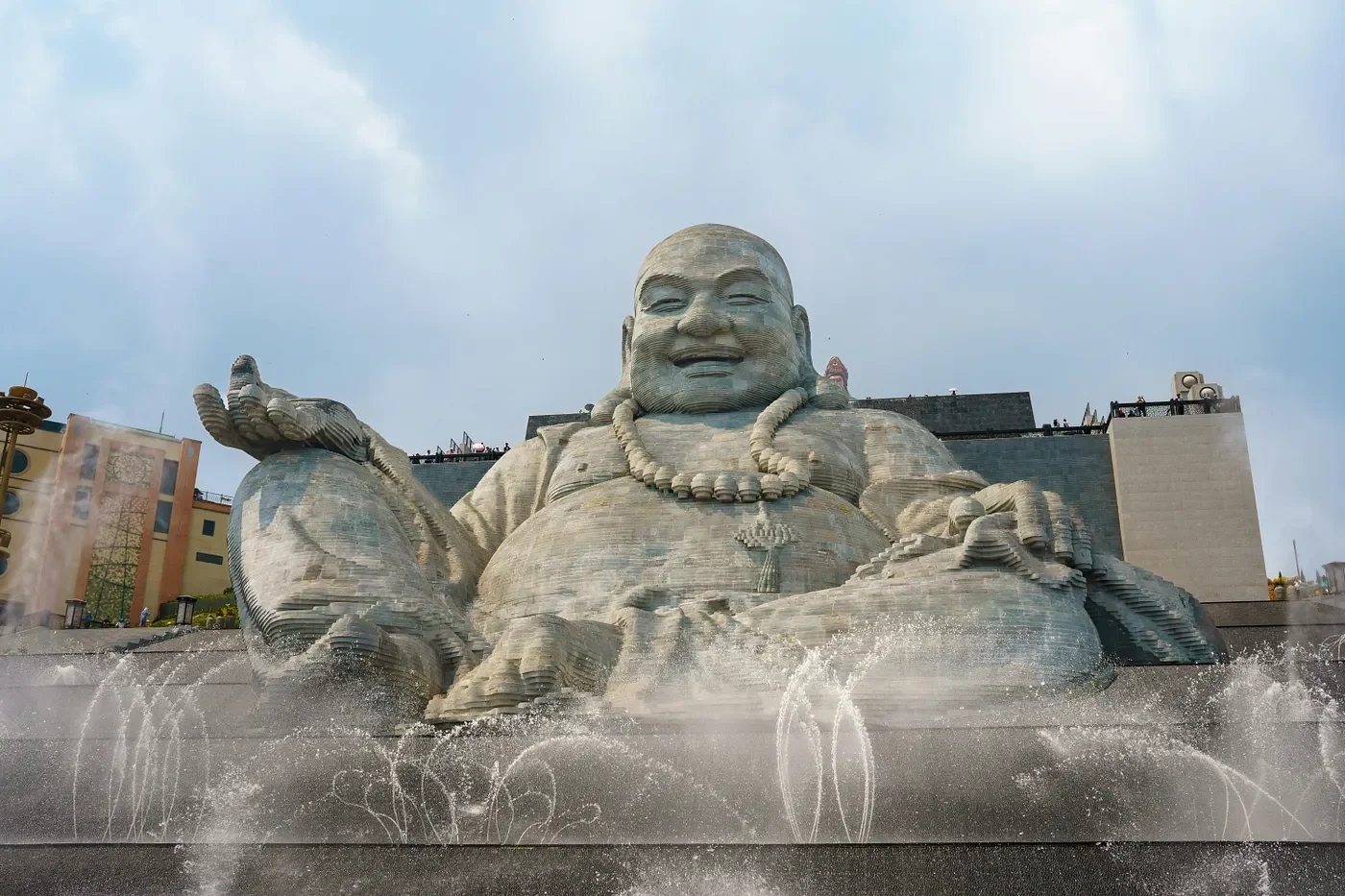
Before Plato built his Republic or Descartes began doubting his own existence, the Buddha was already onto something: that maybe the mind is both the problem and the key.
It seems as good a place as any to start — with the original master of overthinking who somehow made peace with the noise.
The Big Idea
“You can’t stop the storm — but you can stop shouting at the rain.”
Life rarely goes to plan. The wheels come off, we crash, and it’s natural to blame ourselves — but that’s the real mistake. The better move is to accept what’s happened and move on, because the way you think shapes the person you become.
Easy to say, hard to do — and that’s exactly what the Buddha wanted to teach us.
The Man and the Moment
Siddhartha Gautama, later known as the Buddha, was born around 563 BCE in Lumbini, now part of Nepal.
India then was alive with ideas: wanderers, ascetics and holy men debating under banyan trees. Kingdoms rose and fell; the air smelled of spice, smoke and speculation. Everyone had a theory about the gods — and most charged for it.
Siddhartha grew up in comfort, a prince in a world where tradition was law. His father shielded him from pain and decay — no wrinkles, no funerals, no reminders that everything falls apart. The first luxury bubble.
But curiosity has a habit of sneaking out. One day he ventured beyond the gates and met an old man, a sick man and a corpse — the ancient equivalent of accidentally switching on the evening news.
If decay and death were the rule, not the exception, what was the point of anything?
His father probably hoped he’d shake it off. Instead, Siddhartha became obsessed. People thought him odd: a melancholy prince muttering about mortality. But the questions wouldn’t leave him alone.
Then came the fourth encounter: a wandering monk, serene despite the dust and hunger. If peace was possible in that man, perhaps it was possible for everyone.
So one night Siddhartha slipped out of the palace, leaving behind his wealth, his status, and a family who must have wondered what on earth he was doing.
It was the original midlife crisis — only in a youngster and without the motorbike.
Why It Mattered
For years he roamed northern India, fasting and punishing his body in the hope that suffering might starve itself to death. Legend says he became so thin you could see daylight through his ribs.
Eventually, he gave up trying.
Under a fig tree by the Neranjana River, he sat down and said, in spirit if not in words, enough is enough.
He let the mind do what it does — chatter, worry, replay memories like a Netflix boxset — and stopped chasing every thought like a child chasing pigeons. In that surrender, something remarkable happened. He saw that suffering wasn’t caused by the world, but by the mind’s habit of clutching at it.
He woke up — not in a blaze of divine glory, but in a moment of deep, ordinary clarity. That’s what Buddha means: the awakened one.
Life, he realised, involves dukkha — not “suffering” exactly, but “perpetual wobbliness.” Things change, we cling, we panic, we scroll. And so we suffer.
The way out isn’t to escape the world but to see it — to catch craving as it arises, like noticing a thought before it runs off and buys a sports car it can’t afford.
Meditation, in his view, wasn’t mysticism; it was mental hygiene.
The Buddha wasn’t preaching doom; he was offering maintenance advice for the human mind.
Stop trying to control everything, he said, and the chaos quietens by itself.
Two and a half thousand years later, we’re still catching up.
The Legacy
The Buddha’s teaching spread without conquest, creed or conversion. It travelled by word of mouth and sandal leather, carried by monks with nothing but bowls, patience and — since Google Maps hadn’t been invented — an excellent sense of direction.
The Emperor Ashoka later sent monks across Asia carrying not weapons but words. In China it met Confucius, in Japan it became Zen, and by the 1960s it washed up on Western shores alongside sitars and incense. Even The Beatles embraced it.
By then, enlightenment had gone global — though the West, true to form, tried to trademark it.
His insight — that the mind is both the source and solution of suffering — would quietly shape psychology itself. Freud, without knowing it, was treading ground the Buddha had already cleared. Cognitive therapy, emotional regulation, mindfulness — all echo his principle that thoughts aren’t facts and awareness, not suppression, is the key to freedom.
He compared the mind to a monkey swinging from branch to branch, never still. Modern neuroscience calls it the default mode network — that restless hum of internal chatter. Meditation really does quieten it. The lab coats eventually caught up with the loincloth.
But the Buddha wasn’t talking about neurons; he was after something deeper: the collapse of the illusion of a solid self.
“There is no fixed ‘I’,” he said — only a stream of sensations, memories and thoughts, endlessly changing. The self is a process, not a person.
It’s a hard idea to swallow in an age obsessed with self-expression and personal branding. If Siddhartha had posted “There is no self” online, he’d have been fact-checked within minutes. Yet letting go of the self, even a little, frees us from the exhausting project of constantly defending it.
He didn’t reject pleasure; he just stopped confusing it with meaning.
The goal wasn’t detachment but liberation from the reflex to cling.
When you stop trying to make life obey your expectations, you discover it doesn’t need to.
The Buddha’s genius lay in showing that peace doesn’t require belief — only attention.
You don’t have to worship; you just have to notice.
In Our Time
If the Buddha were alive today, he probably wouldn’t have an Instagram account — though if he did, it would be the same photo of a tree every day, captioned Still here.
Modern life runs on craving. We refresh our feeds like gamblers pulling levers on a slot machine of validation. Every notification whispers: Maybe this will make you happy.
Spoiler: it won’t.
Social media thrives on tanha — thirst or grasping — keeping us hooked on the promise of satisfaction just around the corner. One more scroll. One more like. One more version of ourselves.
Technology doesn’t just meet desires; it manufactures them. The average person owns more “essentials” than entire villages once possessed — and still feels incomplete.
Our devices whisper enlightenment through convenience: You don’t have to wait. You don’t have to think.
The iPhone — that modern Bodhi tree in reverse — offers endless connection while quietly training the mind never to sit still.
The Buddha might chuckle: “It’s not the phone that’s the problem,” he’d say. “It’s the itch you keep scratching with it.”
We’ve become allergic to quiet. Yet silence, he might remind us, isn’t empty — it’s full of the things we keep avoiding.
We call it boredom; he called it the beginning of awareness.
I sometimes try to meditate, though my mind treats silence as a personal challenge. Within thirty seconds it’s replaying a conversation from 1974, composing a shopping list, and worrying about climate change.
The Buddha said thoughts are like clouds drifting across the sky. Mine behave more like seagulls at a picnic.
Stillness, he’d insist, isn’t laziness; it’s rebellion. In a culture that monetises distraction, the act of paying attention is quietly revolutionary.
Perhaps what he found under that tree wasn’t revelation but relief: the discovery that life didn’t need fixing after all.
The world kept turning — imperfect, untidy — and that was somehow enough.
Key Texts and Teachings
The Dhammapada — A collection of the Buddha’s sayings in verse form. The world’s oldest self-help book that actually helps.
The Four Noble Truths — Life involves suffering; suffering comes from craving; there’s a way out; it involves behaving, thinking and breathing better.
The Eightfold Path — The practical bit: right view, right speech, right action, right effort, right mindfulness, right concentration.
The Jataka Tales — Stories of the Buddha’s past lives, teaching compassion, patience, and occasionally the perils of talking animals.
The Essence
“All that we are is the result of what we have thought.” — The Dhammapada
(Followed, perhaps, by: “…so maybe stop thinking quite so much.”)
To know the mind is to free it.
And from that freedom comes the quiet, subversive truth that peace was never missing — only misplaced.
So that’s the Buddha for you. Being happy doesn’t depend on getting more “stuff.”
It depends on having just enough — which rather ruins my excuse for another camera upgrade.
Next time: from one who found truth in stillness to one who found it in motion — Thales of Miletus, the man who thought everything was made of water.