
BURIED
Prologue
The wreck does not always show itself.
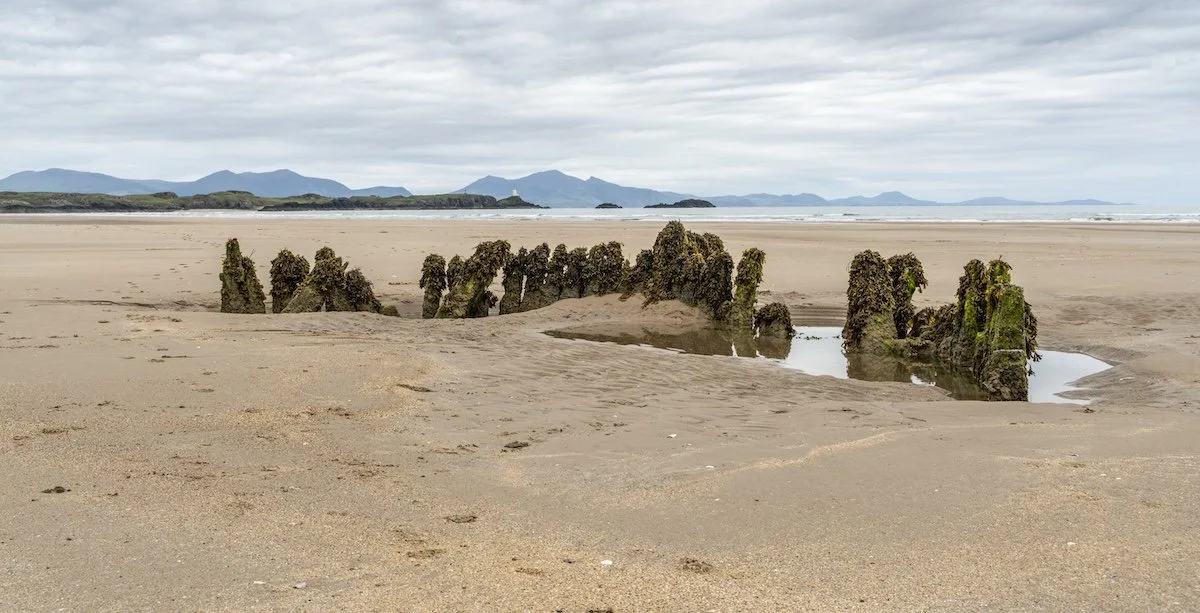
Most winters the sands at Malltraeth bury it completely beneath the tide line. Then the storms arrive out of the south-west and the sea begins stripping the shore bare again. Slowly at first. A darker shape beneath the water. Then timber. Curved ribs forcing their way upward through the sand like the exposed bones of a buried whale.
I first saw the remains after several days of winter storms along the coast. The wind had eased overnight, though the air still carried the cold dampness that follows winter storms on the Irish Sea. Across the estuary the mountains of Eryri stood half-hidden beneath low cloud.
I was alone on the beach. The tide had retreated far across the estuary, leaving only wet sand, gulls, and the sound of distant water moving through the channels toward Llanddwyn.
Up close, the timbers were blackened oak, split by salt and years beneath the sand. Iron bolts protruded from the wood thick with rust. Part of the hull still lay buried beneath the sand.
Later, searching through local records, I found the name.
Athena.
A Greek brig wrecked near Llanddwyn on the south west coast of Anglesey in December 1852 while attempting to reach Liverpool from Alexandria with a cargo of beans.
The reports revealed little else.
Only fragments remained:
a cargo manifest; a registry entry; the captain’s name.
Georgios H. Colscundi.
Standing beside the wreck in the cold wind, I imagined what that last voyage may have been like. The long passage northward from the Mediterranean. The worsening weather beyond Gibraltar. The unfamiliar Welsh coastline emerging through fog and rain.
Much of what follows is imagined. The voyage, the wreck, and the captain were real. The rest belongs to the uncertain space between history and the sea.
Hydra
Georgios Colscundi was born in 1822 on the island of Hydra, where nearly every family measured its fortunes by ships.
As a child he grew up among harbour noise, rope tar, white stone, and chapel lamps flickering above the sea. His grandfather Nikolaos had sailed during the Greek War of Independence under Admiral Miaoulis, and in the evenings he told stories of burning warships and storms beneath Mediterranean stars.
‘The sea remembers everything,’ the old man once told him.
His father Antonis traded across the eastern Mediterranean carrying grain, timber, and olive oil between Crete, Alexandria, and the islands.
By thirteen, Georgios was already sailing beside him.
The sea became less an occupation than an inheritance.
Years later, when Antonis acquired a brig named Athena, Georgios recognised the vessel immediately as the shape his own life would take.
The Athena
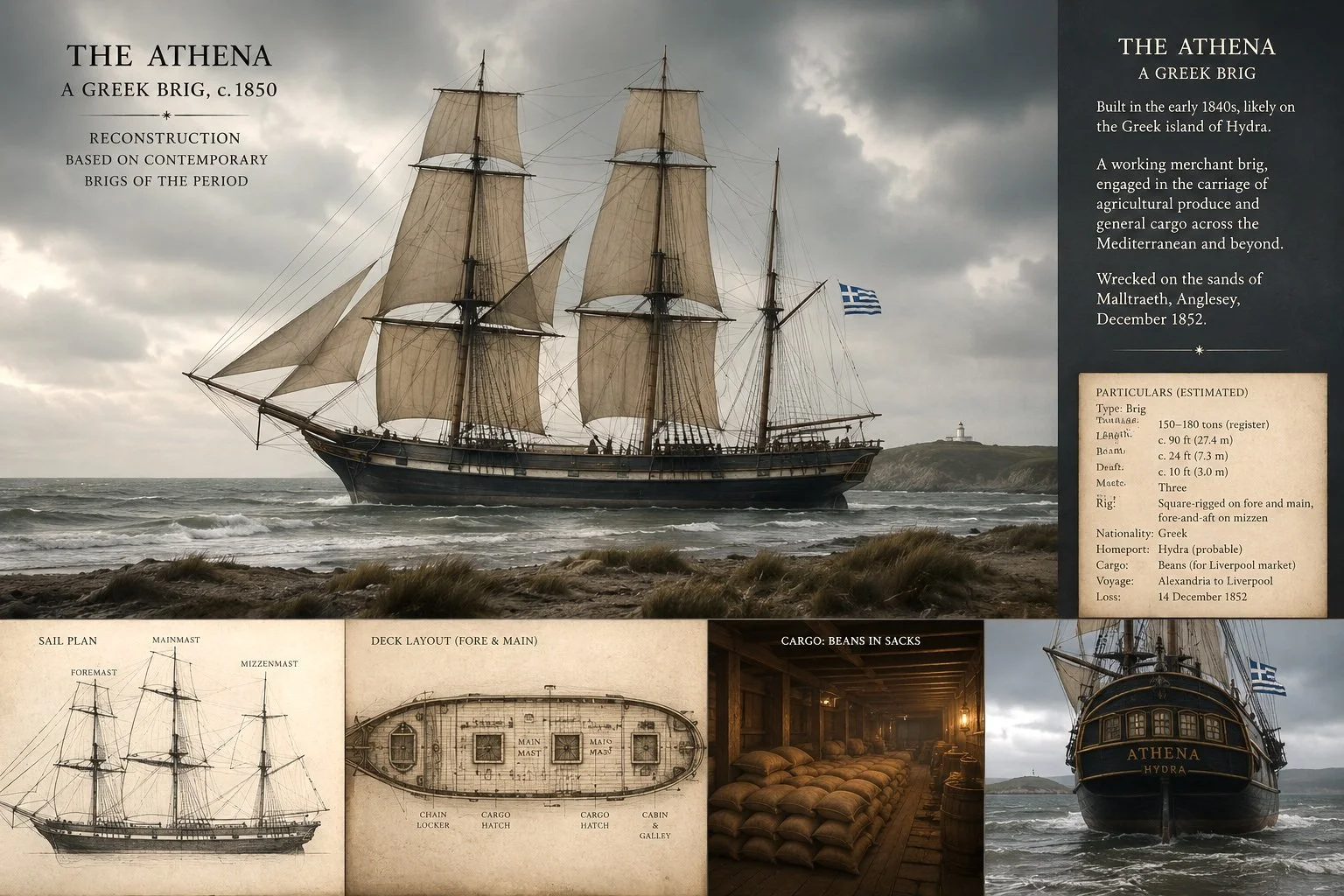
The Athena was not beautiful in the decorative sense. She was a working vessel built for cargo and weather, her timbers worn smooth by years at sea.
Georgios learned the ship gradually through labour. How she answered the helm. How her hull settled in rough water. How the rigging sounded beneath strain.
By his late twenties command had passed quietly from father to son during a winter crossing through the Adriatic after Antonis fell ill at sea.
There was no ceremony, only responsibility.
From then onward every life aboard the Athena travelled became Georgios’s responsibility.
Meanwhile the maritime world was changing around them.
Steamships began appearing more frequently in Mediterranean ports, trailing black smoke across the harbours while merchants spoke increasingly of schedules and profit rather than seasons and wind.
Still, sail endured, and so did Georgios.
Alexandria
By the autumn of 1852, Georgios had spent more than half his life at sea.
The Athena arrived at Alexandria beneath oppressive heat after carrying cargo south from Crete. The harbour was crowded with sailing ships, labourers, traders, and the growing presence of steam.
Everywhere Georgios looked, the future seemed to belong to iron and coal.
Then came the commission.
Three thousand sacks of New Sardi beans for Liverpool.
A profitable cargo. A late-season voyage.
The safer choice would have been to remain in the Mediterranean until spring, but ships needed work. Crews needed wages, and owners expected profit. So Georgios accepted the contract.
That night he stood alone aboard the Athena listening to steam whistles drifting across the Alexandrian harbour.
For the first time in years, he felt uneasy.
Northward
Beyond Gibraltar the sea changed.
The Atlantic moved differently beneath the hull, lifting the Athena in long heavy swells unlike the sharper waters of the Mediterranean. The air grew colder. Dampness entered everything aboard.
Days lost their shape.
Clothing never fully dried. Water turned stale in the casks. Tempers shortened among the crew as fog and rain followed them north.
The sea itself became unfamiliar.
Georgios trusted neither the weather nor the currents beyond the Bay of Biscay. Storms formed quickly here. Wind altered without warning. At times the ship sailed through such dense mist that sea and sky vanished entirely.
The crew grew quieter with every northern mile.
One sailor admitted he now dreamed only of sunlight and warm stone beneath his feet.
Georgios understood the feeling. Hydra already seemed impossibly distant.
Anglesey
The first sign of land came through fog.
Not coastline. Only a change in the sea itself.
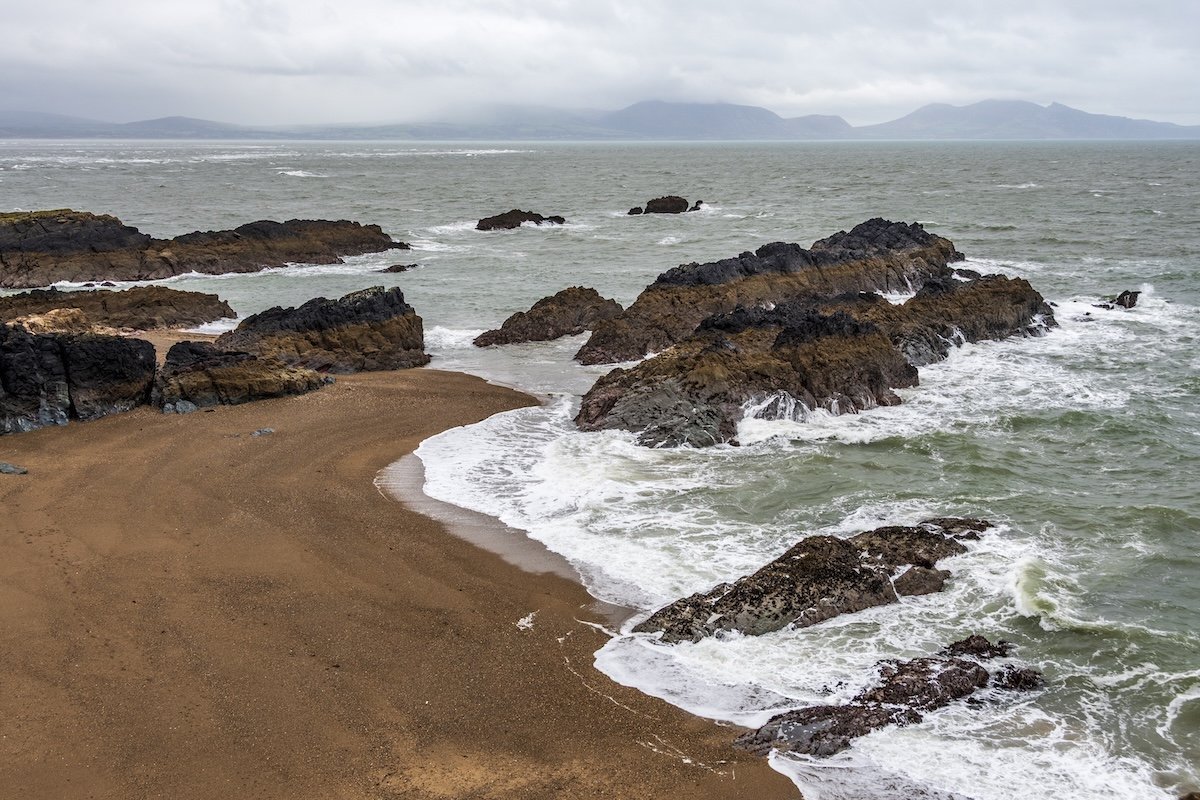
Currents began striking the hull unevenly while breakers sounded somewhere beyond the mist. Rain swept across the deck beneath strengthening wind. Then came the lighthouse beam. A pale light turning slowly through darkness.
The crew gathered silently along the rail watching it appear and vanish again beyond the driving rain.
No one aboard truly understood these waters. The Welsh coast emerged only in fragments: black rocks; white surf; a distant chapel bell carried strangely through the fog.
Toward dawn, voices drifted faintly across the water from somewhere ashore.
A language entirely unknown to the exhausted sailors listening through the storm. Welsh.
Sands
The grounding came without violence at first. Only a deep shudder passing upward through the hull.
Then the scraping sound beneath the ship. Sand.
For one impossible moment, Georgios believed the sea might still release them. Instead the next wave drove the Athena harder onto the bank.
The brig began listing almost immediately. Water entered the hold. Cargo shifted below deck. Each wave struck broader and heavier than the last while the timbers groaned beneath the strain.
The terrible thing was not panic. It was the gradual loss of control.
The crew understood slowly that the Athena was no longer a ship moving through the storm. She had become part of it.
Near dawn the foremast finally collapsed into the surf.
Beyond the breakers, figures carrying lamps moved along the Welsh shore.
People were watching them die. And none aboard the brig could understand a word they shouted through the storm.
Shore
By morning the worst of the weather had passed.
Villagers gathered along the sands near Malltraeth while local fishermen attempted to reach the wreck through dangerous surf.
The rescue boat finally reached the Athena shortly before noon.
The exhausted sailors climbed down one by one into the unfamiliar Welsh voices and freezing rain.
When Georgios finally stepped ashore, he looked back once toward the stranded brig.
The Athena no longer resembled a vessel. Only wreckage waiting for the sea to finish its work.
Throughout the day the tide carried broken timber and cargo onto the beach while villagers offered blankets, broth, and dry clothing to the survivors despite sharing no common language.
That evening, somewhere beyond the dunes, chapel bells sounded faintly across the estuary.
Epilogue — The Timbers
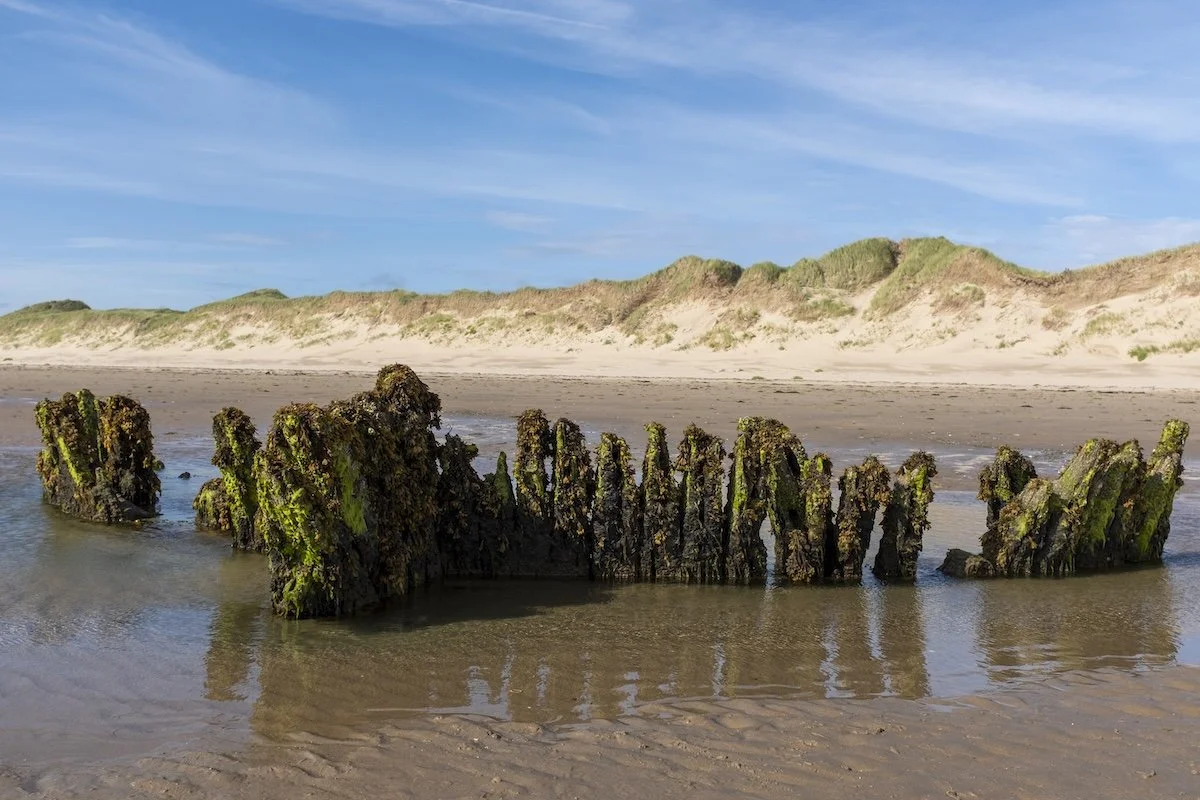
The wreck still appears after winter storms.
Some years the sands keep it hidden entirely. Then the sea shifts again and the timbers rise once more from the shoreline.
Dark wood. Rusting iron. Fragments of a vanished voyage.
Standing beside the remains now, it is difficult not to think about distance.
Hydra. Alexandria. Gibraltar. Anglesey.
The men who crossed those waters are gone but the sea remains.
One winter evening not long ago, I stood beside the exposed wreck as the tide began slowly returning through the estuary. Water spread quietly around the timbers while the mountains beyond disappeared beneath incoming weather.
By morning the wreck would likely be hidden again beneath the sand.
Waiting for another storm. Another winter. Another tide.
The sea remembers everything.
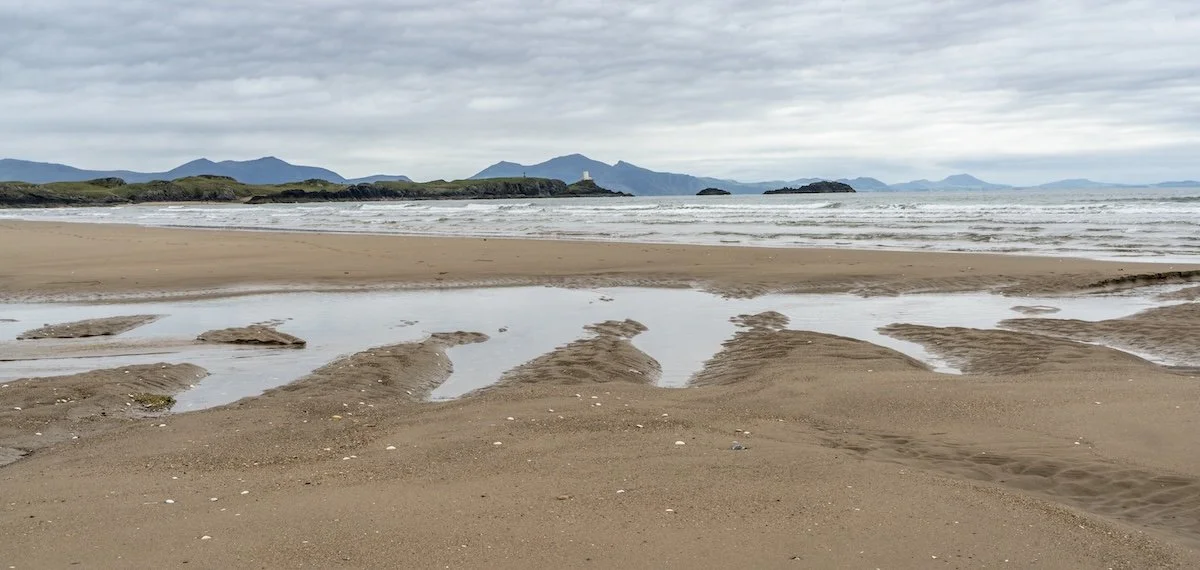
The photographs were taken by me. The Athena was reimagined based on what we know about ships of this kind.