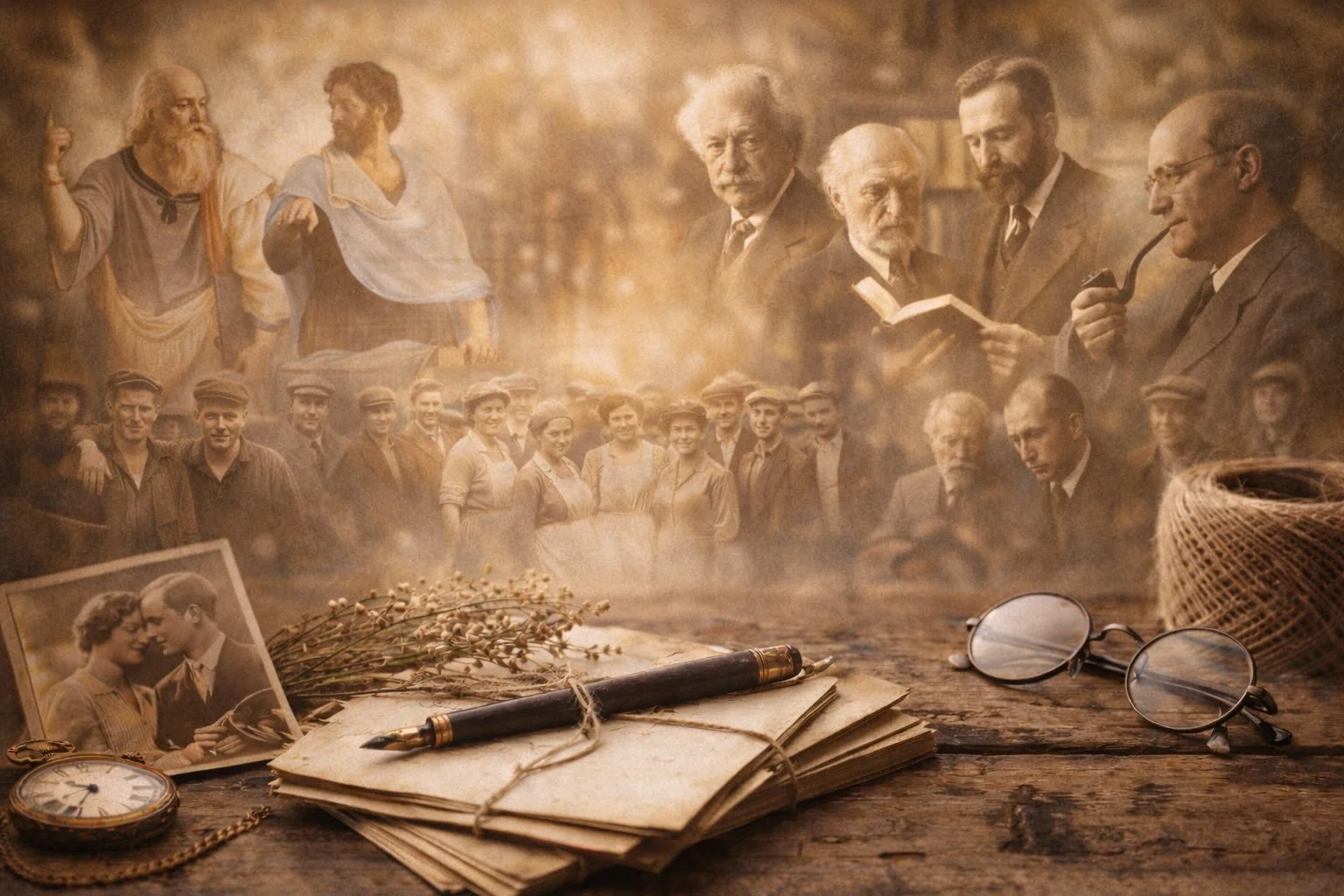
The Human Thread

In 2026 I celebrated seventy-two years on this chunk of rock we call home. Over time I have come to describe the ideas that shape my work as The Human Thread. Now seems like a good time to explain what I mean.

The most important lesson I have learned is simple: change is inevitable; how we respond to it is personal.

I have known loss — the death of parents, financial uncertainty, moments when the ground felt anything but steady. I have also known opportunity, success and doors opening where I did not expect them. Looking back, I can see decisions I might have taken differently. At the time, I was responding with the temperament, fears and hopes I carried then. That is how we all move through change — imperfectly and without the benefit of hindsight.

We don’t all respond in the same way. We are shaped by our personality, upbringing and circumstances at the time. Some hesitate. Some leap. Some quietly endure.

There’s a saying that ‘nostalgia ain’t what it used to be’, and that’s true. We smooth the rough edges of memory and bathe the past in a golden glow. What remains are curated fragments — bright scenes, first loves, old friendships — that feel purer in retrospect than they did at the time.

What interests me now is not the recovery of the past — because that is gone forever — but the continuity between past and present.

That continuity is what I call The Human Thread.

Origins and Perspective

I grew up in a South Wales mining village. The options were plain enough: pit or factory. Most people were born there, grew up there, married there and died there. The boundaries of life were rarely crossed. People understood their place, and that understanding shaped what they dared to hope for.

I felt a restlessness because I wanted something different. Working as a labourer to support myself through university sharpened that resolve. I didn’t resent where I came from, but I knew I didn’t want my life confined to the struggles I witnessed growing up.

At university I studied history, economics and psychology. I wanted to understand the forces that shape societies and the motives that drive individuals. Those early years of physical labour stayed with me. They taught me about strain, endurance and dignity — lessons that no lecture hall could fully convey.

A Life of Inquiry

I went on to spend four decades in sales and marketing in the emerging computer and information technology sector. I travelled widely, watched industries rise and fall, and saw rhetoric outrun reality more times than I care to admit. We called it ‘selling a vision’.

With time has come regret, gratitude and understanding. There are decisions I might have taken differently. But in the moment, we act with the perspective we have. In many ways, I remain the same person — older and, I hope, wiser.

It is no surprise, then, that I became preoccupied with how the mind works — with why people act as they do, and how belief and temperament shape the decisions we make. That curiosity lies at the heart of my writing. One of my fictional characters is Owain Morgan, a late Victorian scholar of the mind who seeks not merely to solve crimes, but to understand the human motives behind them. His investigations are less about guilt than about response — how fear, pride, love or insecurity shape the choices people make.

A Landscape of Time

Today I live in Snowdonia, a landscape that compresses time. Roman roads lie beneath modern tarmac. Victorian slate scars still mark the mountainside. Lives overlap. Effort lingers. What was built, and what was broken, leaves traces.

We live in an age of noise. Political spectacle dominates. Cultural arguments flare and vanish. The temptation is either to retreat into nostalgia or to surrender to cynicism. Both are evasions.

The Human Thread demands something steadier.

It asks us to remember without romanticising.

To criticise without contempt.

To build without forgetting the cost.

What The Human Thread Demands

In my fiction, I inhabit the inner lives of my characters because I have lived long enough to recognise the patterns that shape them — the weight of expectation, the strain of responsibility, the quiet calculations behind every choice. In my essays, I explore how ideas — philosophical, political, psychological — travel quietly through generations. These are not separate pursuits. They are part of the same inquiry.

What does it feel like to live through change?

What do we inherit without noticing?

What are we responsible for passing on?

History is often marked by great declarations, laws and charters that appear to alter the course of events. But they endure only because of how people accept, resist or reinterpret them.

In the years ahead, my aim is simple: to add my own thread carefully, honestly and with hope.

— John E. Rees, 17/02/2026