
The Buddha
“And so, where better to begin than with a man who went looking for peace and found it sitting quietly under a tree?”
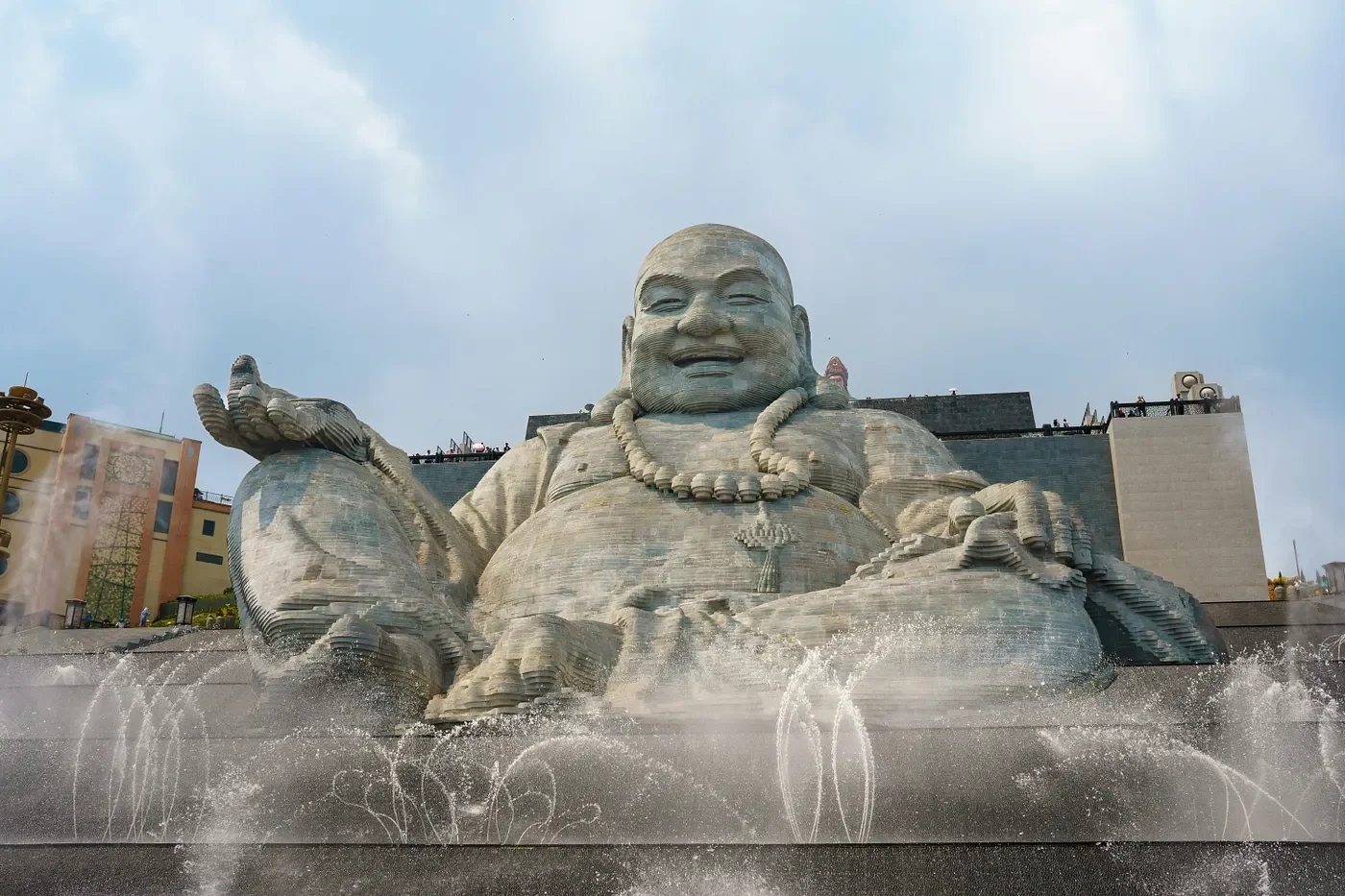
Before Plato built his Republic or Descartes began doubting his own existence, the Buddha had already arrived at a simple and unsettling insight. The mind is both the problem and the key.
It seems as good a place as any to begin.
The Big Idea
‘You can’t stop the storm, but you can stop shouting at the rain.’
Life rarely unfolds as we intend. Things falter, plans collapse, and it is natural to search for someone or something to blame, often ourselves. Yet the deeper move is not to resist what has happened, but to see it clearly.
The way we think shapes the way we suffer, and the way we live.
Easy to say. Much harder to do.
That was the work the Buddha set himself.
The Man and the Moment
Siddhartha Gautama, later known as the Buddha, was born around 563 BCE in Lumbini, in what is now Nepal.
India at the time was alive with speculation. Wandering teachers, ascetics, and philosophers offered competing accounts of the world and our place within it. Kingdoms rose and fell. Traditions held firm, even as ideas shifted beneath them.
Siddhartha was raised in comfort, shielded from hardship by a father determined to preserve the illusion of permanence. Age, illness, and death were kept at a distance.
But such things have a way of making themselves known.
When Siddhartha finally encountered them, an old man, a sick man, and a corpse, the effect was immediate and irreversible. If decay and death were not exceptions but the rule, then what was the nature of the life he had been living?
The question did not leave him.
Then came a fourth encounter, a wandering monk, composed and at ease despite his circumstances. If such peace were possible, perhaps it was not confined to the fortunate.
One night, Siddhartha left the palace behind. He left wealth, status, and the life he had known, in search of an answer that would endure.
Why It Mattered
For years he travelled, subjecting himself to extremes of discipline and deprivation, in the belief that suffering might be overcome through endurance.
In time, he abandoned that path.
Under a fig tree by the Neranjana River, he sat down and stopped striving. He allowed the mind to do what it does, to move, to replay, to wander, without following every thought to its conclusion.
In that stillness, something shifted.
He saw that suffering did not arise simply from the world, but from the mind’s habit of grasping at it, holding, resisting, insisting.
He woke up, not in a moment of spectacle, but in a clarity that was at once simple and profound.
That is what Buddha means. The awakened one.
Life, he realised, involves dukkha. Not suffering in the narrow sense, but a kind of persistent unease. Things change. We cling. In that tension, we suffer.
The way out is not to escape the world, but to see it as it is. To notice the movement of thought before it gathers force.
Meditation, in this sense, was not mysticism, but a form of mental discipline. A way of observing the mind without being carried by it.
The aim was not control, but understanding.
The Legacy
The Buddha’s teaching spread without force or proclamation. It travelled by word of mouth, carried by those who found in it something worth preserving.
Under the Emperor Ashoka, it moved across Asia, adapting and evolving as it went. In China it met Confucian thought. In Japan it became Zen. In the West, much later, it re-emerged in new forms, often simplified, sometimes misunderstood.
Yet the central insight endured.
The mind is both the source and the resolution of much of what we experience.
Modern psychology would, in time, arrive at similar ground. The idea that thoughts are not facts, that awareness matters more than suppression, that attention can reshape experience, all echo something the Buddha had already seen.
He described the mind as restless, constantly in motion. Contemporary neuroscience uses different language, but recognises the same pattern.
Still, he was not concerned with mechanisms, but with experience.
There is no fixed self, he suggested, only a flow of thoughts, sensations, and memories, constantly changing. The self is not a thing, but a process.
It is an idea that remains difficult to accept, particularly in a world that places such emphasis on identity. Yet even a partial understanding of it can loosen the need to defend and maintain a version of ourselves that was never stable to begin with.
He did not reject pleasure. He simply refused to confuse it with meaning.
The goal was not withdrawal, but freedom from the need to cling.
In Our Time
The conditions have changed, but the pattern remains.
Modern life is organised around attention. How to capture it, hold it, and redirect it. We are encouraged, constantly, to seek satisfaction just beyond the present moment.
One more message. One more update. One more improvement.
Yet the sense of completion rarely arrives.
Technology does not create desire so much as amplify it. It gives form to the same restlessness the Buddha described. The impulse to reach, to compare, to become.
We have, perhaps, become less comfortable with stillness. Silence is quickly filled. Distraction is easily available.
And yet, as he observed, it is often in that quiet, the space we tend to avoid, that something becomes clear.
Attention, in this sense, is not passive. It is an act.
To sit with a thought without pursuing it. To notice a feeling without immediately responding. These are small things, but not insignificant.
I sometimes attempt it, with mixed results. The mind does not easily settle. It moves, returning to old conversations, unfinished tasks, imagined futures.
But the point is not perfection.
It is the noticing.
Perhaps what he found under that tree was not a solution, but a release. The recognition that life did not need to be forced into shape in order to be lived.
That it could remain imperfect, unfinished, and still be enough.
Key Texts and Teachings
The Dhammapada - A collection of sayings that distil the Buddha’s teaching into concise reflections.
The Four Noble Truths - That life involves suffering, that suffering has a cause, that it can end, and that there is a path toward that end.
The Eightfold Path - A practical framework for living with clarity, attention, and restraint.
The Jataka Tales - Stories that explore compassion, patience, and the consequences of action.
The Essence
‘All that we are is the result of what we have thought.’ — The Dhammapada
To understand the mind is, in part, to loosen its hold.
And in that loosening, something becomes possible. Not certainty, but a quieter way of being.
Peace, perhaps, was never absent.
Only obscured.
Follow the thread:
Read Aristotle, Hobbes, Machiavelli, and others who shaped how we think.