
Dolwyddelan Castle
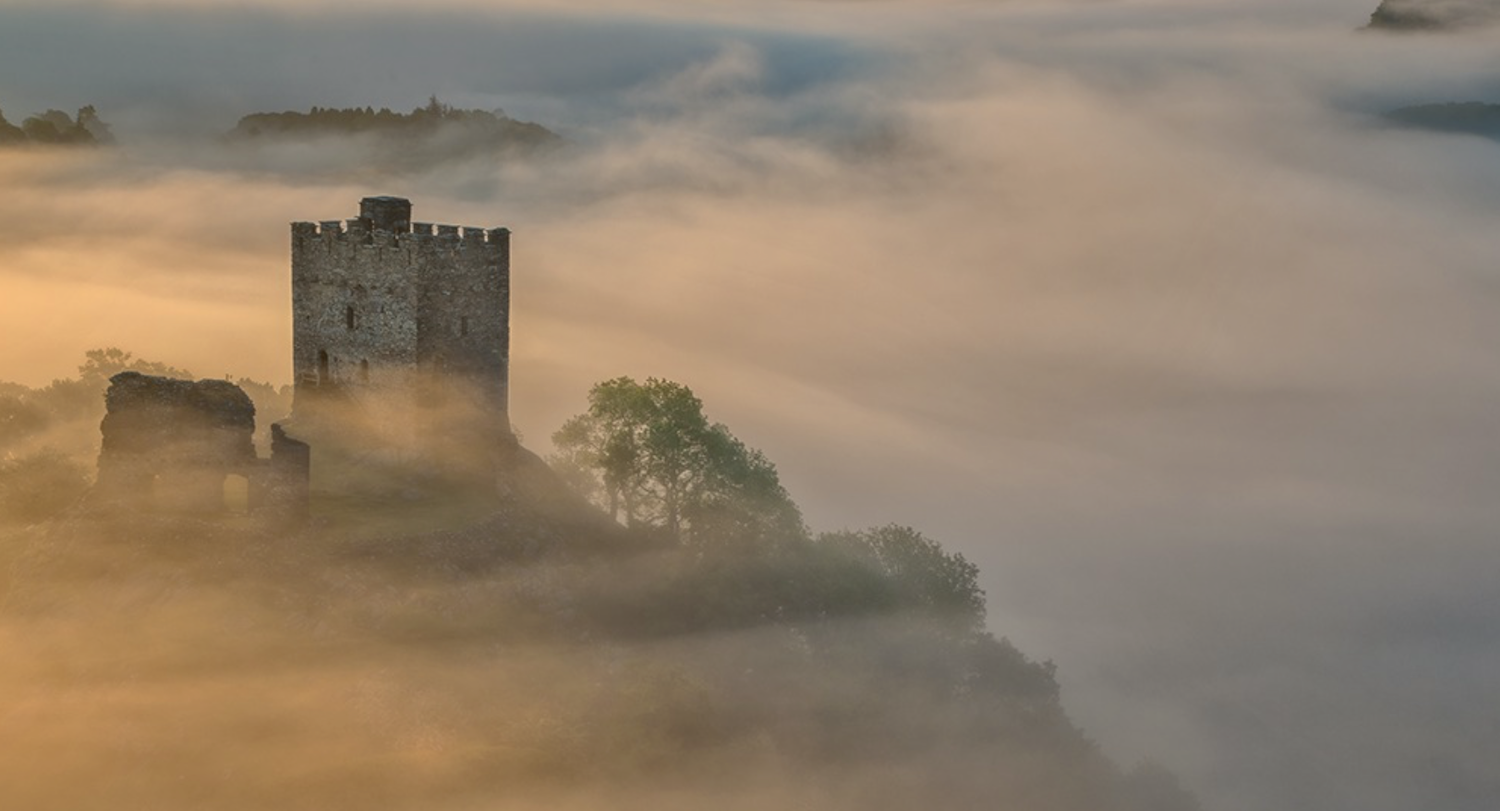
Between history and imagination
Dolwyddelan Castle is close to my home. I pass it often, usually without thinking too much. Just that brief glance as the road bends and the tower comes into view.
I walked up to it properly last year. That was different. Being there, rather than passing by, stayed with me longer than I expected. It was that walk, I think, that led to the idea of setting a story there.
It later became the origin of Professor Owain Morgan, though that wasn’t clear at the time.
The castle has a history that is only partly visible, and I’ve found myself returning to it, trying to understand what it is that holds me there.
Dolwyddelan Castle stands in a narrow valley in Eryri, its surviving tower rising above the road that now runs through it. It is usually associated with Llywelyn ab Iorwerth, Llywelyn the Great, and is generally thought to have been built in the early thirteenth century, when control of the surrounding uplands carried both strategic and symbolic weight.
Its position is not accidental. The castle sits along a route that links the Conwy valley with the interior of Eryri, a landscape that, in the thirteenth century, was not remote in the modern sense, but politically central. Movement through these valleys seems to have mattered. Control wasn’t only a matter of holding ground, but of watching and shaping how people passed through it.
What remains today is fragmentary, but suggestive. The rectangular tower, with its thick stone walls and elevated entrance, reflects a style of fortification that is both practical and restrained. It lacks the scale of the later Edwardian castles, yet it carries a different kind of authority, one that feels closer to the ground it stands on.
Much of what we understand about the castle comes from later study rather than any continuous record. Archaeological work and architectural analysis, particularly in the twentieth century, have helped to clarify its phases of construction and use, though some uncertainty remains. Like many medieval sites in Wales, Dolwyddelan seems to exist partly in documentation, and partly in inference.
By the nineteenth century, the castle had fallen into significant disrepair. Travellers described it as a ruin, its walls broken and its interior exposed to the weather. At the same time, it began to attract a different kind of attention. Antiquarians and visitors, influenced by Romantic ideas of landscape and history, saw in such places not simply remnants of the past, but something closer to an expression of it.
The restoration that followed was undertaken by Lord Willoughby de Eresby, who carried out substantial repairs between the 1840s and 1860s. His work did not attempt a full reconstruction, but it did stabilise the structure and reshape parts of it according to the sensibilities of the period. As with many nineteenth-century interventions, the line between preservation and interpretation isn’t always easy to see.
It begins to matter, because what we see now isn’t a purely medieval object. It is the result of at least two moments of construction: the original building, and the later effort to recover and present it. Each reflects a different understanding of what the castle was, and what it might have been thought to be.
In the historical sources that remain, Dolwyddelan appears only intermittently. It is not a site that dominates the chronicles, nor one that features prominently in royal records. Yet its association with Llywelyn the Great has endured, supported by tradition and by its geographical logic within his sphere of influence. In this sense, it sits somewhere between certainty and belief, something known, but not entirely fixed.
That ambiguity seems to be part of what allows it to function within fiction.
In The Silence of the White Shadow, the castle is presented much as it stands, but with certain adjustments. Interior spaces are extended, domestic arrangements imagined, and connections between rooms clarified in ways that serve the movement of the narrative rather than the limits of the surviving structure. They aren’t there to mislead, only to make the space usable, somewhere events can unfold.
The figure of Baron de Haersbie, associated in the novel with the castle’s later history, is entirely fictional. In reality, there was no such ownership, nor any transfer to a private antiquarian of the kind described. The nineteenth-century restoration remains the most significant modern intervention, and its effects are still visible in the structure today.
What begins to emerge is a quieter distinction. The castle itself is real, its history partly recoverable, partly uncertain. The version that appears in the novel draws on that reality, but does not attempt to reproduce it exactly. It follows the same pattern that shapes our understanding of the site more broadly, a combination of material evidence, later interpretation, and the needs of the present.
Today, Dolwyddelan Castle is cared for by Cadw and remains open to visitors.
It hasn’t remained unchanged. What stands there now is a mixture of what was built, what was repaired, and what has been understood since.
From the research behind The Silence of the White Shadow.