
The Human Thread
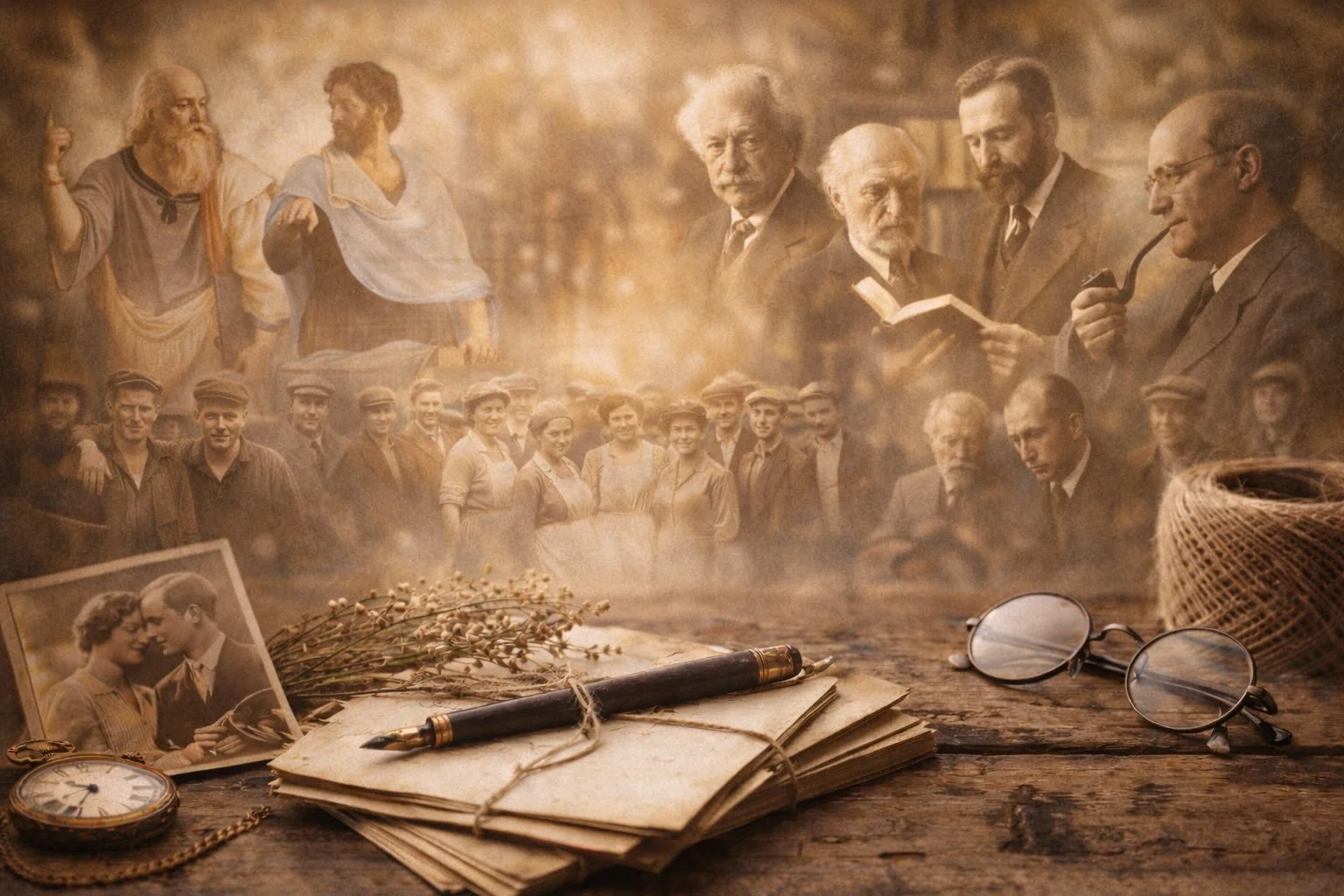
In 2026 I celebrated seventy-two years on this earth. Over time, I have come to describe the ideas that shape my writing as The Human Thread.Now seems like a good time to explain what I mean.
The most important lesson I have learned is simple: change is inevitable; how we respond to it is personal.
But we do not all respond in the same way. We are shaped by personality, upbringing and circumstance. Some hesitate. Some leap. Some quietly endure.
There is a saying that ‘nostalgia ain’t what it used to be’, and that is true. We smooth the rough edges of memory and bathe the past in a golden glow. What remain are curated fragments — bright scenes, first loves, old friendships — that feel purer in retrospect than they did at the time.
What interests me is not the recovery of the past — that is gone forever — but the continuity between past and present.
That continuity is what I call The Human Thread.
Growing up in a South Wales mining village gave me first-hand experience of how physically demanding and economically precarious life can be. Working as a labourer to support myself through university deepened that understanding.
My studies in history, economics and psychology enabled me to understand the forces that shape societies and the motives that drive individuals. Those early years of physical labour stayed with me. They taught me about strain, endurance and dignity — lessons no lecture hall could fully convey.
It is no surprise, then, that I became preoccupied with how the mind works — with why people act as they do, and how belief and temperament shape decisions. That curiosity lies at the heart of my writing.
In Unseen Souls, I explore the harsh working and living conditions of the Dowlais ironworks in the mid-nineteenth century. It follows the life of Eliza Turner, who breaks free from an apparently inevitable future. Her artistic ability becomes the means of her escape. There is, inevitably, something of my own history in that story. I know those valleys intimately, through family and friends, many of whom still live there.
Another of my fictional characters is Professor Owain Morgan, a late Victorian scholar of the mind who seeks not merely to solve crimes but to understand the motives behind them. His investigations are less about guilt than about response — how fear, pride, love or insecurity shape the choices people make. I see elements of my own development in Owain. His adventures are set in North Wales, where I now live and which I know intimately.
We live in an age of noise. Political spectacle dominates. Cultural arguments flare and vanish. The temptation is either to retreat into nostalgia or to surrender to cynicism. Both are evasions.
The Human Thread demands something steadier.
It asks us to remember without romanticising.
To criticise without contempt.
To build without forgetting the cost.
In my fiction, I inhabit the inner lives of my characters because I have lived long enough to recognise the patterns that shape them — the weight of expectation, the strain of responsibility, the quiet calculations behind every choice. In my essays, I explore how ideas — philosophical, political and psychological — travel quietly through generations. These are not separate pursuits. They are part of the same inquiry.
What does it feel like to live through change?
What do we inherit without noticing?
What are we responsible for passing on?
History is often marked by great declarations, laws and charters that appear to alter the course of events. But they endure only because of how people accept, resist or reinterpret them.
In the years ahead, my aim is simple: to add my own thread - carefully, honestly and with hope.
This is the work.