
When Time Isn’t Something You Spend
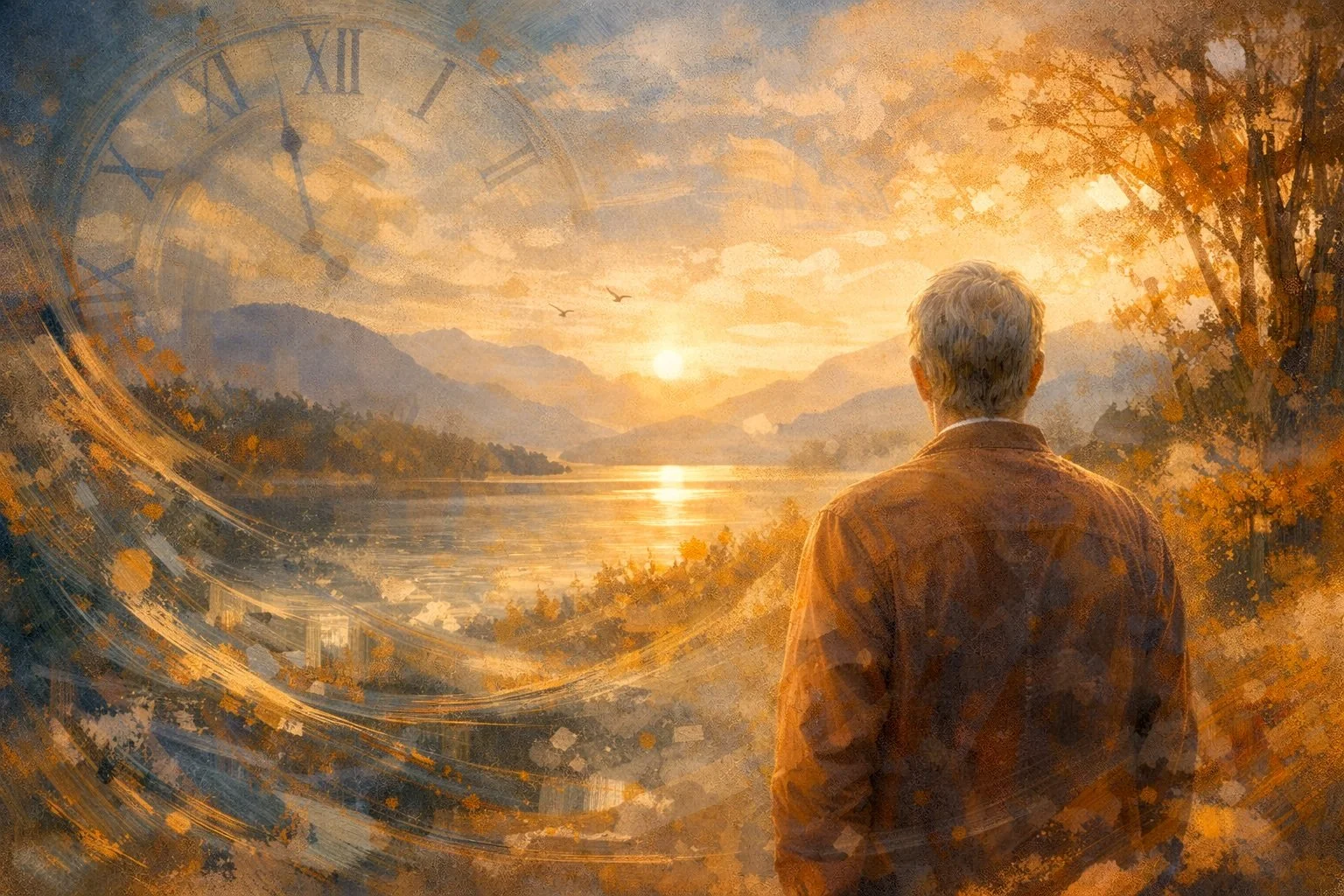
For much of my working life, time was something to manage.
My days were dominated by meetings, sales calls, management decisions, and constant travel. Airports blurred into hotel rooms, hotel rooms into conference calls, and conference calls into presentations somewhere else in the world. Every minute seemed valuable and was carefully filled.
Even when I wasn’t working, I was often thinking about work. Planning the next call. Preparing the next trip. Solving the next problem. Time wasn’t something you experienced so much as something you organised.
In that world, the clock rules everything.
Efficiency becomes a virtue. Productivity becomes a measure of worth. Days are divided into units, and success often means fitting as much as possible into each one.
Only later did I realise how completely this way of thinking had shaped my sense of time.
The French philosopher Henri Bergson argued that we often confuse two very different things. There is clock time — the measurable minutes and hours that keep trains running and businesses operating. But there is also lived time, what Bergson called duration, the way we actually experience life as a continuous flow of memory, feeling, and awareness.
For most of my career, I lived almost entirely in clock time.
Now life is quieter and more creative. I write. I read. I walk. Sometimes the most important thing that happens in a day is simply an idea that takes shape slowly over the course of an afternoon.
What has surprised me is how different time feels when it’s no longer tightly scheduled.
Moments expand. A short walk can feel unexpectedly rich. A conversation can wander and deepen without anyone glancing at their watch. Even an ordinary morning can feel surprisingly full.
Part of this, I suspect, comes from a quiet realisation that arrives later in life. When you are young, time seems abundant. You assume there will always be more of it.
Later, you begin to sense something else.
You may not know exactly how much time lies ahead, but you know with certainty that there is less of it than there once was.
Oddly enough, that awareness doesn’t make time feel scarcer. It makes it feel more valuable in a different way.
Not as something to pack full of activity, but as something to inhabit more carefully.
Perhaps this is what Bergson meant when he spoke about duration. Time is not really a series of identical minutes passing on a clock face. It is the texture of lived experience — the way memory, attention, and imagination fold together into the present moment.
And once you notice that, the thinness of purely scheduled time becomes very obvious.
The clock still exists, of course. Life still requires structure. But the moments that matter most rarely arrive on schedule.
They appear when we stop rushing long enough to notice them.