

Ideas That Shape Us
Reflections on history and what it means to be human

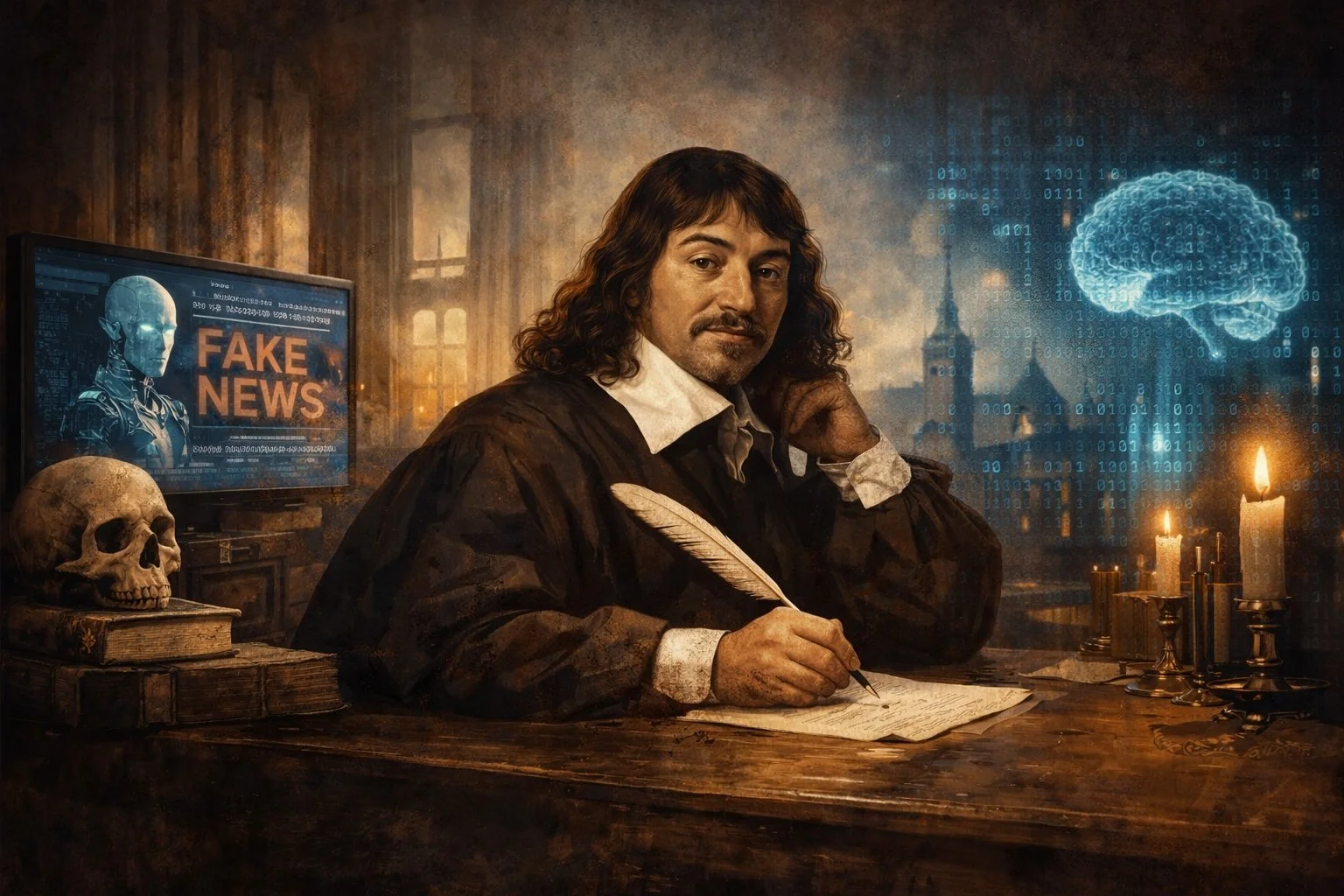
René Descartes: The Man Who Doubted Everything
"Cogito, ergo sum" — "I think, therefore I am" — is a famous line from René Descartes. He lived in 17th‑century Europe, when war, plague, superstition, and church opposition to science made truth seem uncertain. To find something certain, he decided to doubt everything.
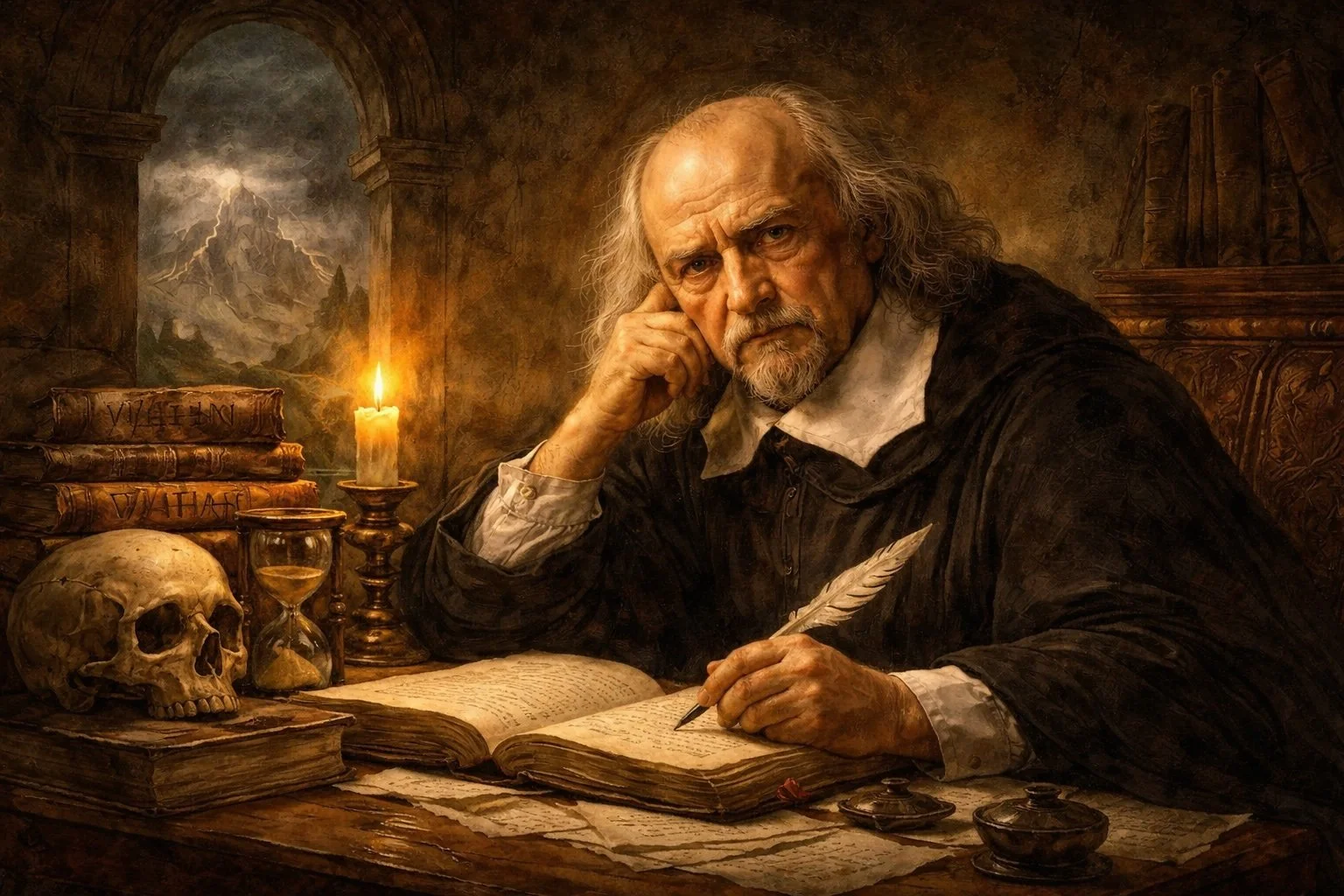
Thomas Hobbes: The Philosopher of Fear
Hobbes thought civilisation exists for one clear reason: people can't be trusted with total freedom. Writing during the English Civil War, he said order needs a strong state to keep everyone in line. His grim view of human nature still influences how we see authority, security, and the fragile deal that holds modern society together.
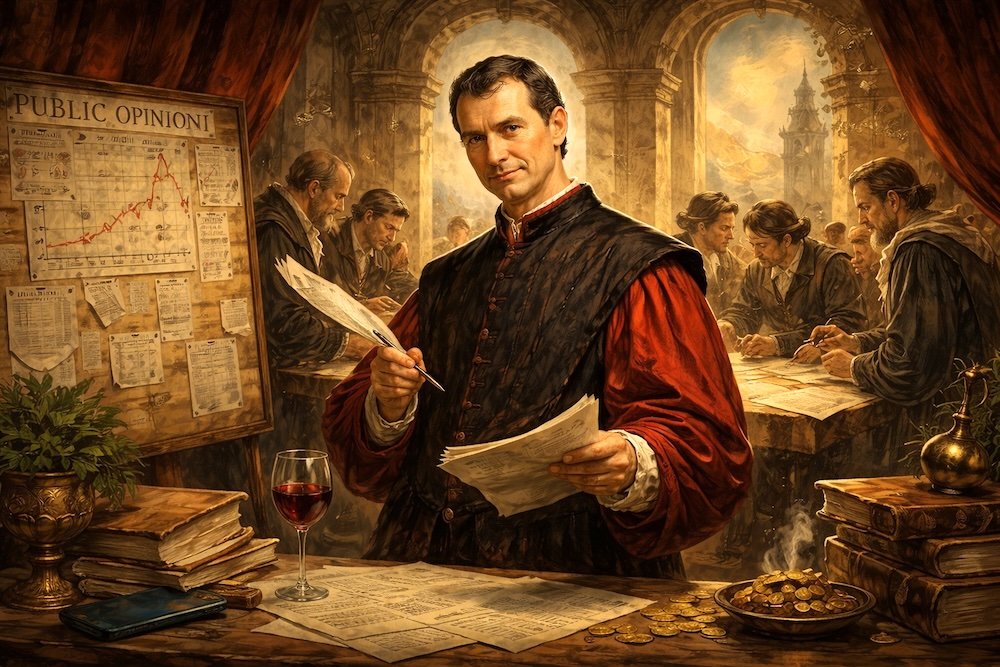
Machiavelli: The Original Spin Doctor
Niccolò Machiavelli was the man who taught politics to stop pretending it had morals. The original spin doctor, he replaced divine right with human cunning and turned survival into an art form.
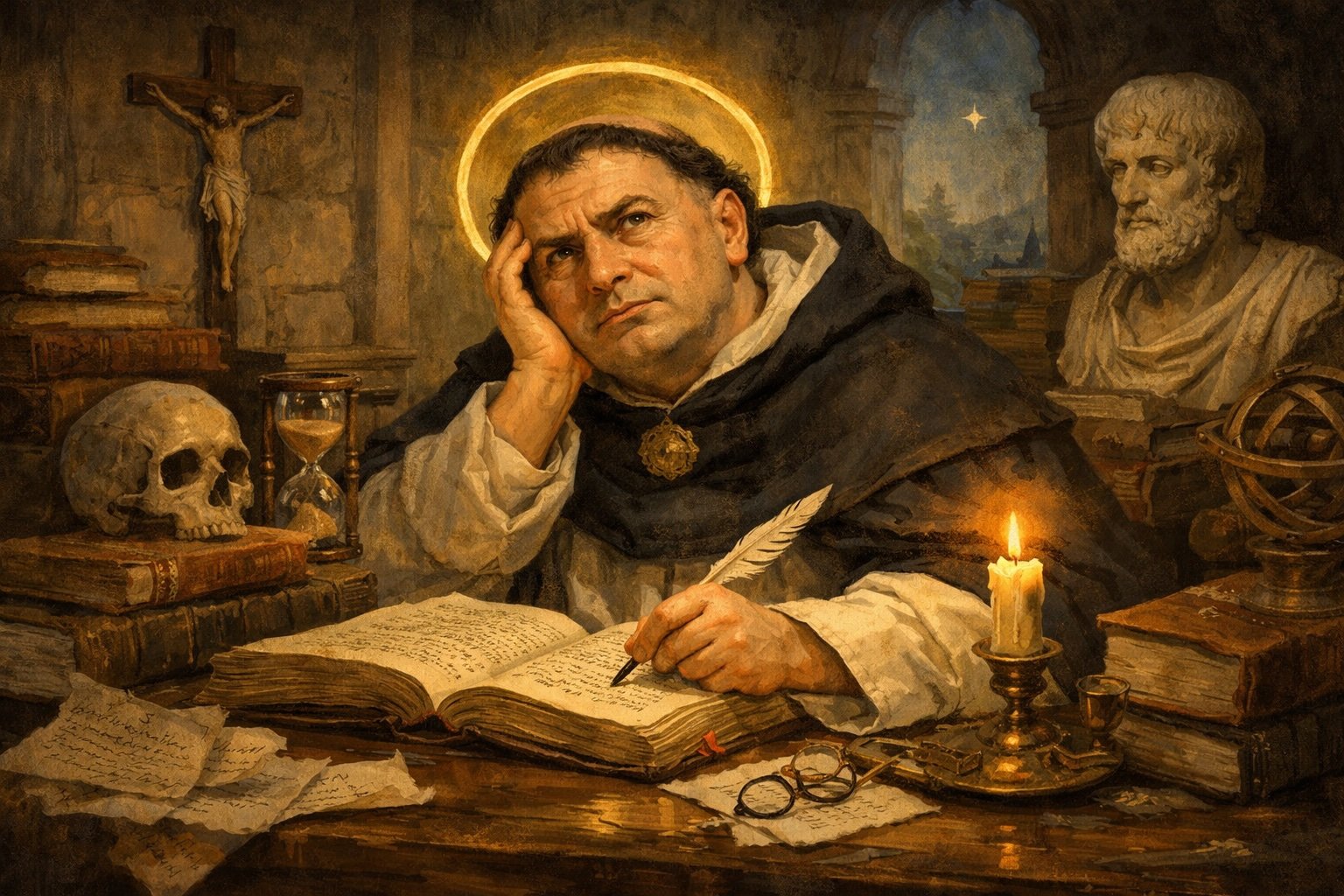
Thomas Aquinas: Patron Saint of Overthinking
If Aristotle set philosophy walking, Thomas Aquinas made it kneel and then helped it stand again without losing dignity.
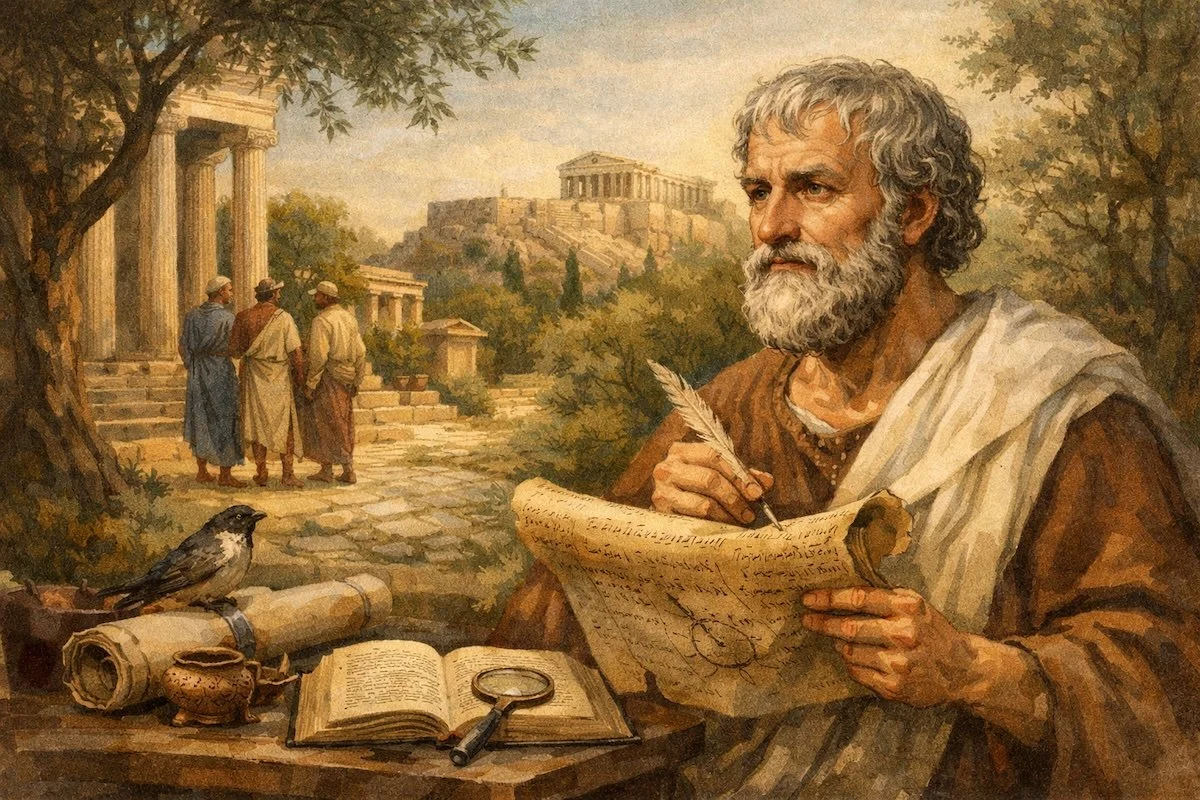
Aristotle: The Philosopher Who Inspired Monty Python
I’m a man of a certain age who, like many 1970s students, loved Monty Python. Hearing “Aristotle” makes me, Pavlov-like, add: “was a bugger for the bottle” — a line from The Philosophers’ Song, a silly pub singalong that name-checked Western philosophy over beer.

Plato’s Cave, Now Streaming in 4K
After Socrates drank hemlock, Plato cleaned up the talk—philosopher, organizer, and the man who turned chaos into curriculum. If Socrates was a street busker, Plato built the concert hall.
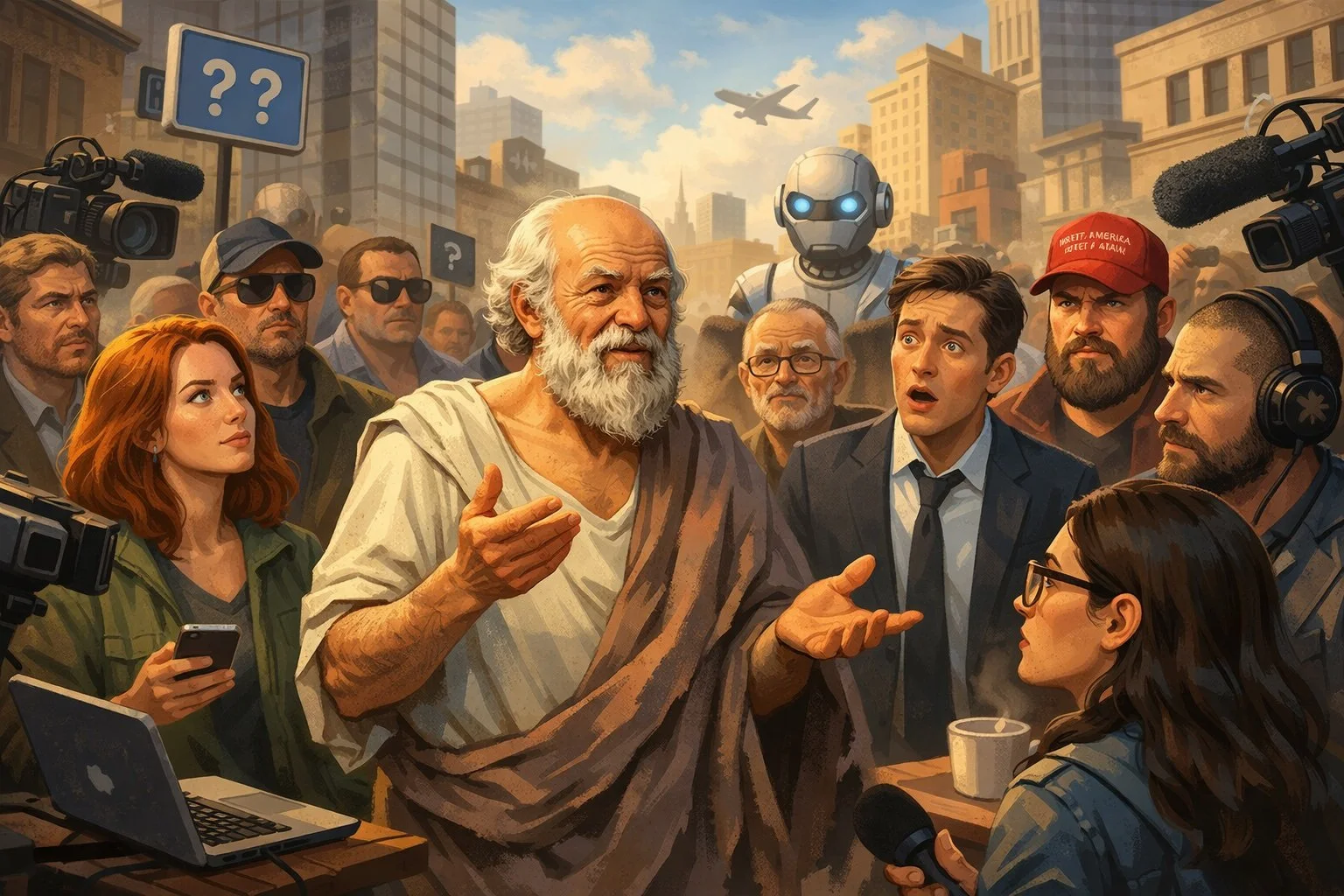
The Dangerous Art of Asking Questions
Socrates perfected the art of irritating people by asking endless questions. It’s a great way to understand but in his case it annoyed too many people and he paid with his perceived annoyance with his life.

The Man Who Tried to Save the World with Good Manners
Everyone wants a better world, but most of us hope someone else will sort it out. Confucius had a better idea. He said order starts close to home — in how we speak, act, and treat one another.

How a Triangle Changed Everything
The world seems chaotic: noise without rhythm, movement without meaning. Pythagoras saw otherwise. He found pattern and proportion — everything as number: harmony hidden in motion, maths beneath music, patterns behind every note, shape and star.

The Man Who Thought Everything Was Made of Water
The world once seemed senseless: storms, plagues, misfortune blamed on angry gods. Thales proposed a different idea — the universe governed by observable forces, not moods. He argued everything arose from water. It sounds odd now, but it was the first attempt to explain the world without Olympus — the birth of reason from a single question: “Shall we think about it?”
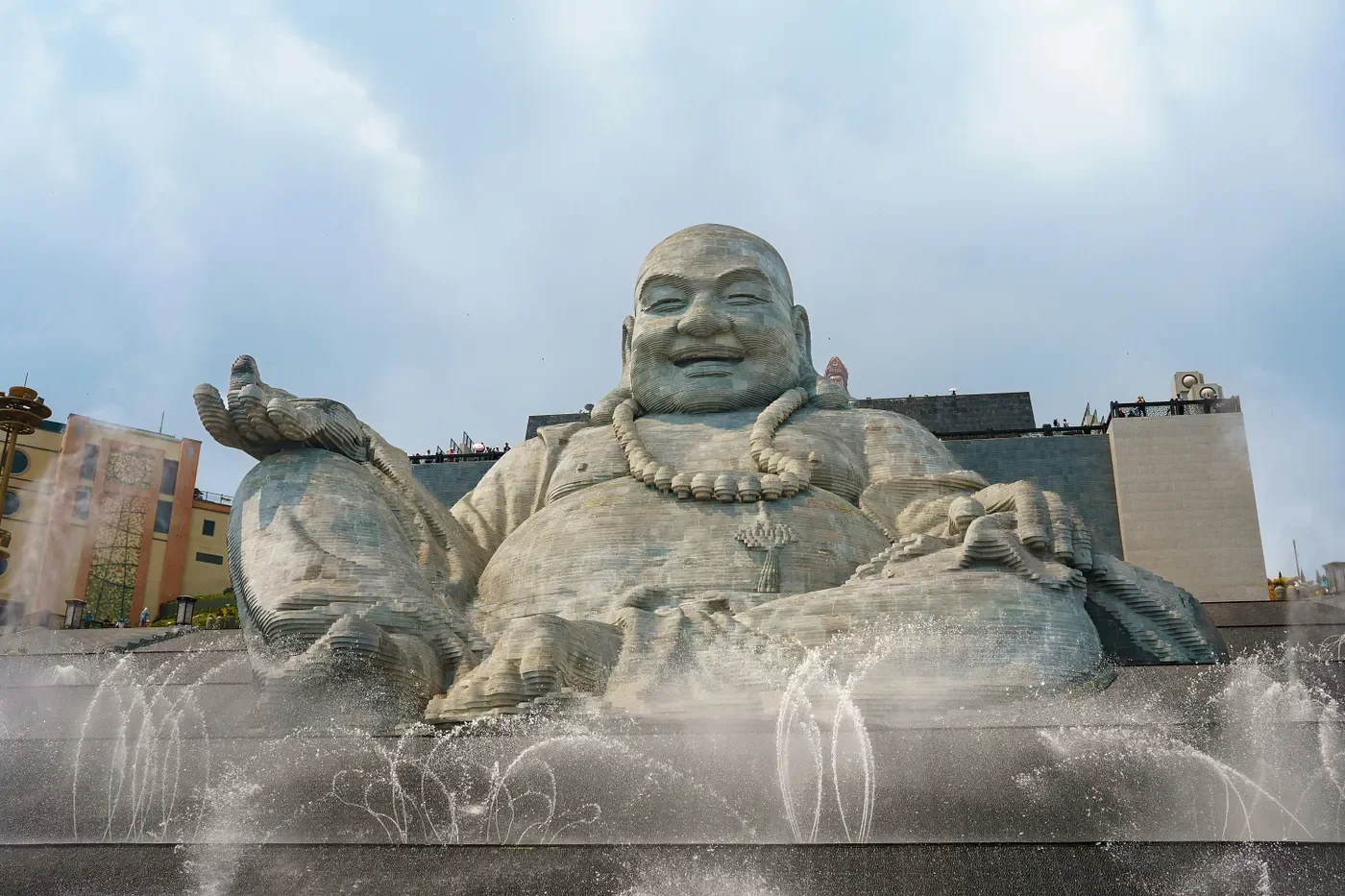
The Buddha
Before Plato built his Republic or Descartes began doubting his own existence, the Buddha was already onto something: that maybe the mind is both the problem and the key.
Big Ideas (Some I Understand, Some I Don’t and Some That Make My Brain Explode)
At the time of writing this (2025), I’ve been on this lump of rock we call home for seventy-one summers. In January 2026, I’ll be entering my seventy-second winter, and I hope there are many more left. But who knows?